Japan
Where Ancient Tradition and Future Innovation Coexist
Japan is the only country where you can eat a 200-year-old sushi recipe for lunch, ride the world's fastest train in the afternoon, bathe in a volcanic hot spring by evening, and sleep in a capsule the size of a coffin by night -- and none of it will feel contradictory. This is a nation that treats tradition and innovation not as opposites but as dance partners. Tokyo is sensory overload in the best possible way. Shibuya's scramble crossing pours thousands of people across an intersection every two minutes. Akihabara pulses with anime, electronics, and maid cafes. Shinjuku's Golden Gai packs 200 bars into six alleyways. And then, a five-minute walk takes you to Meiji Shrine, where a forest of 100,000 trees donated from across Japan creates a silence so complete the city becomes a rumor. Kyoto is Japan's soul. Over 2,000 temples and shrines sit among bamboo groves, rock gardens, and geisha districts that look unchanged since the 17th century. The golden pavilion of Kinkaku-ji reflects in its mirror pond. The thousand torii gates of Fushimi Inari climb a mountain in tunnel of vermillion. And in the tea houses of Gion, the ancient art of the Japanese tea ceremony continues with a precision that borders on meditation. Beyond the big cities, Japan reveals itself in quieter ways. The pilgrimage trails of Kumano Kodo wind through forests of cedar and cypress. The snow monkeys of Nagano soak in hot springs with an expression that suggests they've figured out something humans haven't. And the food -- from a standing-only ramen counter in a train station to a twelve-course kaiseki in Osaka -- operates at a level that makes Michelin stars feel like an understatement.
Experience Highlights
Wander through the 10,000 vermillion torii gates of Fushimi Inari Shrine as they climb through a forest up the mountain
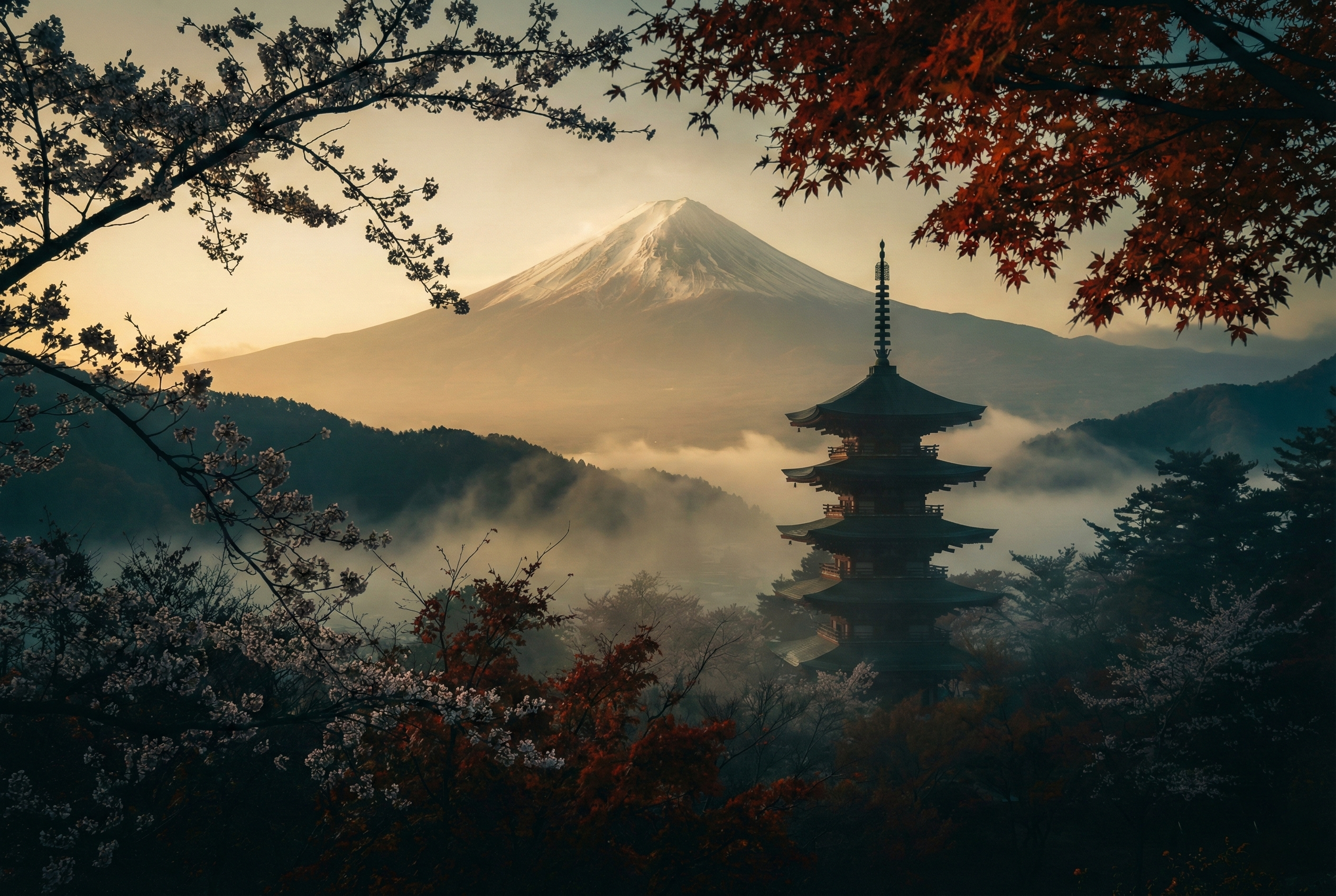
Ride the Shinkansen (bullet train) from Tokyo to Kyoto at 300 km/h while Mount Fuji slides past the window
Experience a traditional Japanese tea ceremony in a Kyoto tea house with a kimono-clad tea master
Walk through the bamboo grove of Arashiyama where towering stalks create a green cathedral of rustling sound
Visit the Tsukiji Outer Market in Tokyo for the freshest sushi breakfast of your life
Soak in an onsen (natural hot spring) with mountain views, following bathing rituals that date back centuries
Your Journey
A carefully crafted itinerary to help you experience the best of Japan
Day 1: Tokyo -- Neon and Tradition
Tokyo doesn't ease you in -- it launches you. The city's energy is electric from the moment you step out of Shinjuku Station into a canyon of light and sound.
Day 2: Tokyo -- Markets, Tech & Tradition
A day that swings between Tokyo's extremes: dawn at a fish market, afternoon in an electronics district, and evening in bars so small they seat four.
Day 3: Bullet Train to Kyoto
Board the Shinkansen and watch Japan's urban sprawl give way to rice paddies and mountains. In 2 hours and 15 minutes, you arrive in a city that was Japan's capital for over a thousand years.
Day 4: Kyoto -- Temples, Bamboo & Tea
Kyoto demands early starts and rewards them with quiet temple gardens, mist-wrapped bamboo groves, and the meditative grace of a tea ceremony.
Day 5: Day Trip -- Nara or Osaka
A short train ride opens two options: Nara's ancient temples where deer bow for crackers, or Osaka's street food scene that locals call "Japan's kitchen."
Day 6: Return to Tokyo & Departure
A final Shinkansen ride gives you one more chance at Mount Fuji views before Tokyo delivers a last dose of its controlled chaos.
Inclusions
- Accommodation in Tokyo hotel and Kyoto ryokan/hotel (5-7 nights)
- Daily breakfast (Japanese style at ryokan)
- Japan Rail Pass (7-day ordinary class) covering all Shinkansen and JR trains
- Guided walking tour in Kyoto
- Tea ceremony experience
- Tsukiji Market tour with sushi tasting
- All airport transfers
- Portable Wi-Fi device for the duration
Exclusions
- International flights to and from Japan
- Japan visa fees (if applicable)
- Personal expenses and shopping
- Travel insurance
- Meals not mentioned in itinerary
- Entrance fees to temples and museums (typically JPY 300-600 each)
- Tips (not customary in Japan)
Things to Know
Japan is a cash-heavy society despite being technologically advanced. Carry yen -- many restaurants and shrines don't accept cards.
Tipping is not practiced and can be considered rude. Excellent service is the default, not something extra.
Remove shoes before entering temples, ryokans, and many restaurants. Wear clean, easy-to-remove shoes.
Trains are silent zones. No phone calls, keep voices low, and don't eat on local trains (Shinkansen is fine).
Cherry blossom season (late March to mid-April) is magical but crowded and expensive. Book accommodation months ahead.
Learn basic phrases: "sumimasen" (excuse me), "arigatou gozaimasu" (thank you), "oishii" (delicious). The effort is appreciated.
Ready to Explore Japan?
Let us create a personalized itinerary tailored to your preferences, budget, and travel style.